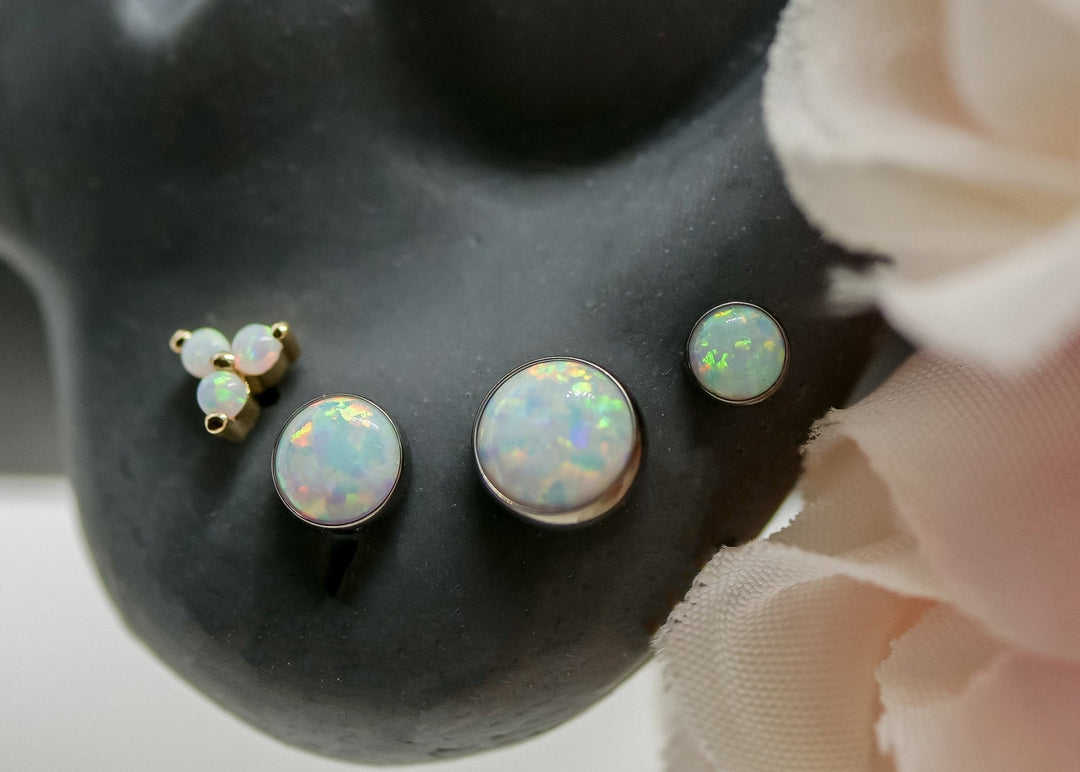
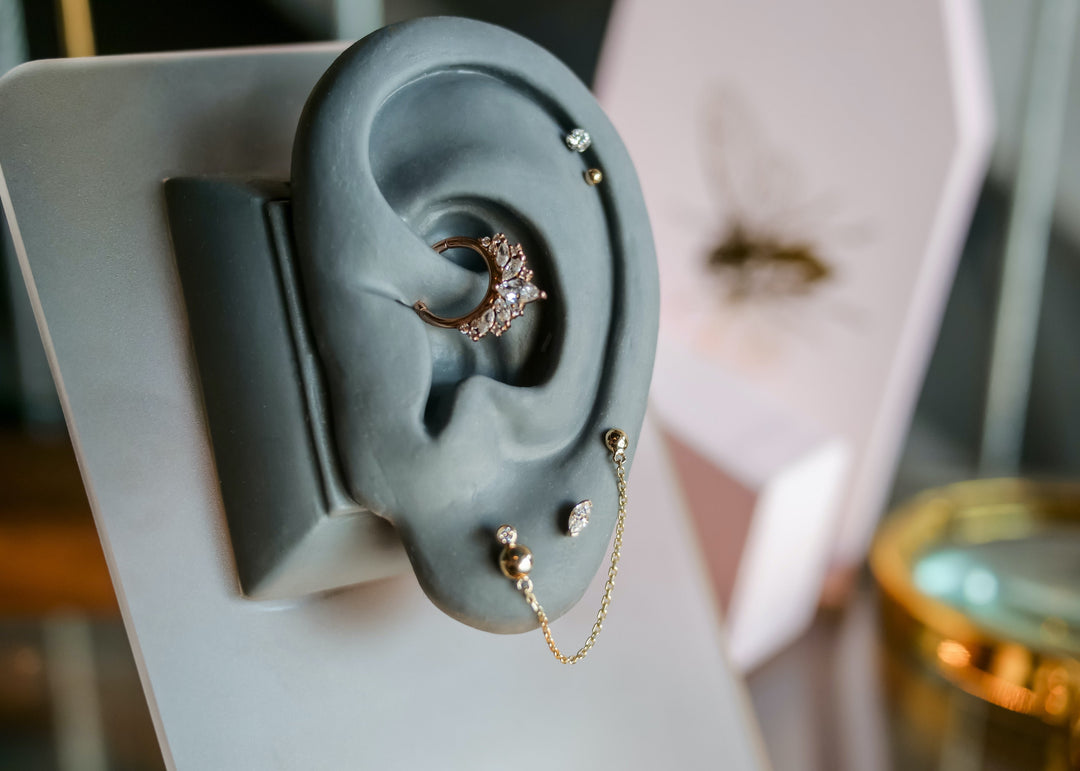
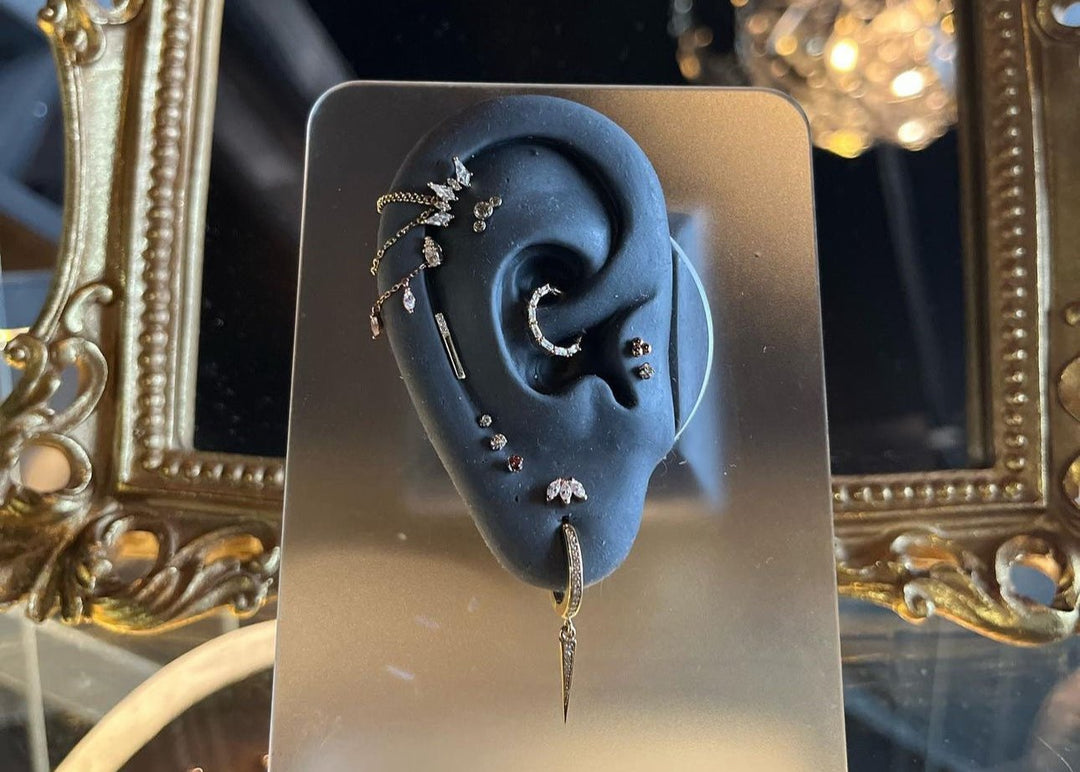
There is a photo on your phone. Maybe multiple photos. A perfectly composed flat-lay of a curated ear, or a close-up of a nose with a delicate gold hoop, or a cartilage stack that looks like someone arranged it by hand for thirty minutes before shooting. The jewelry is tiny and intricate and exactly what you want. You bring it in and ask us to match it. We look at it and have feelings.
Here is what we know about a significant portion of the jewelry that drives piercing trends: it is fashion jewelry. It is designed to photograph beautifully. It is designed to look good in a specific light at a specific moment for a specific editorial. It is not designed to sit inside healing tissue for twelve months and come out the other side intact, with your skin intact, with the fistula shaped correctly. The goals of trend jewelry and the goals of healing jewelry are genuinely different and they frequently conflict.
Fashion jewelry earrings are often made with unknown alloys — base metals with gold plating or gold fill that looks great until the coating wears off and your skin is in contact with whatever's underneath. The posts are frequently too thin for the gauge of the piercing, creating migration pressure. The lengths are designed for the look, not for actual anatomy — too short in bars that don't account for tissue depth, too long in rings that flop around in healing tissue. The closures aren't designed for security in a healing piercing; they're designed to be easy to put on in front of a mirror.
The brands that reputable piercers actually recommend don't always have the most aesthetic Instagram presence. BVLA, Anatometal, NeoMetal, Industrial Strength, Buddha Jewelry — these are brands making jewelry to ASTM material standards with manufacturing tolerances that matter for how the jewelry functions in your body. Their price points are higher because the materials and manufacturing are genuinely different, not because of branding.
Here's where the nuance lives: once a piercing is fully healed, the calculus changes somewhat. A healed lobe in a piece of fashion jewelry you love for a night out is a different situation than a healing cartilage piercing in something you bought off a rack. The risks in a healed piercing are lower — irritation is possible, but you're not jeopardizing the fistula formation itself. The risks in a healing piercing are real and compounding.
We can also help you find the version of what you want that's actually made right. You bring in the reference photo and we find you something in implant-grade gold or titanium that gets you most of the way there. That conversation is part of what we do. The trend is showing you what's possible. Our job is to figure out how to get you something that looks like that and actually belongs in your body.