You come in wanting a specific piercing and we spend what feels like an awkward amount of time just looking at your ear. Or your nose. Or your navel. We tilt your head. We press gently on cartilage. We look at you from multiple angles. You're not sure if we're judging you or diagnosing you. We are doing neither. We are doing math.
The anatomy consultation exists because piercing is not one-size-fits-all, and the industry does a poor job of communicating that. You bring in a reference photo of an ear — often from an editorial shoot, often on a model with very specific cartilage architecture — and the expectation is that we replicate it. Sometimes we can. Sometimes the anatomy you have makes certain placements inadvisable, or requires modification from the reference, or means that piercing will behave differently on your ear than it does in the photo. The consultation is where we figure that out before a needle is involved.
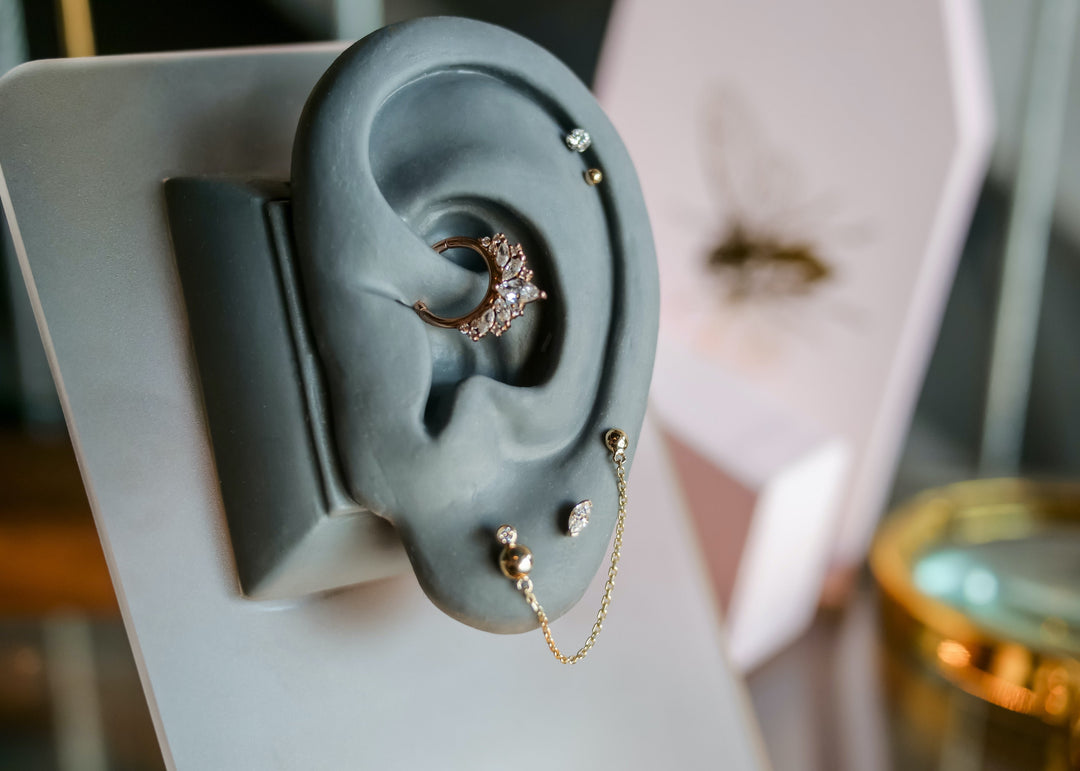
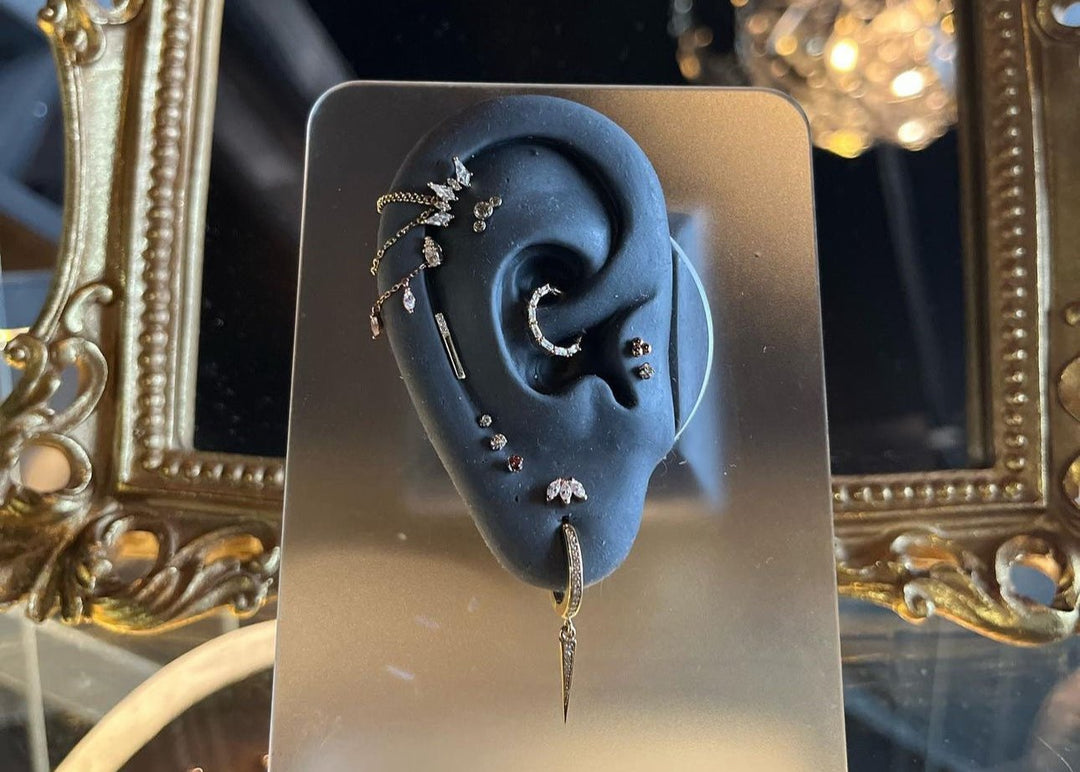
For ears, here's what we're actually assessing: the ridge and curve structure of your helix and antihelix, because those ridges determine whether certain piercings sit the way they're supposed to or end up fighting the cartilage's natural shape. We're looking at where your cartilage sits relative to your head — how much flat surface you have for a helix versus how curled the rim is. We're looking at whether a daith or rook is anatomically present, because not everyone has the fold for those piercings and you can't create anatomy that isn't there. We're looking at your lobes — how high or low they sit, how fleshy versus thin, whether they're attached, how much room there is between natural placement points.
For a septum, we're finding the sweet spot — the thin strip of connective tissue above the cartilage that allows for a comfortable, well-centered placement. Not everyone's sweet spot is in the same place. Not everyone's sweet spot allows for the ring size they have in mind. We're also looking at the straightness of your septum, because a deviated septum changes the centering math in ways that affect how the piercing will look healed.
For a navel, we're looking at whether the tissue has enough depth to anchor the jewelry, how the navel sits when you're standing versus sitting versus bent forward, and how much movement that site experiences with your body. A navel that folds completely flat when you sit is a navel that will put constant pressure on a healing piercing. That's information you need before you commit.
The consultation is also where we ask about your history. Have you had piercings reject before? Do you scar keloid? Do you have autoimmune conditions that affect healing or put you on immunosuppressants? Do you work a physical job where this site will take constant impact? All of it changes the recommendation — placement, gauge, jewelry style, aftercare protocol, realistic timeline expectations.
We would genuinely rather spend fifteen minutes in conversation with you before than have you back six months later with a problem we could see coming from the first look. That is not us being cautious for the sake of it. That is the whole job.