Most piercing aftercare is written for a hypothetical body and applied universally to all bodies, which fails a significant portion of people walking through the door. The hypothetical body is a specific size. It has specific tissue distribution, specific anatomical landmarks in specific locations, specific amounts of movement and friction in specific places. Most bodies are not that body. Fat bodies in particular get either generic advice that doesn't account for their anatomy or — worse — outright refusal from studios that have decided the conversation is too complicated to have.
Fat tissue heals. Fat people heal piercings. The idea that fat bodies are categorically worse candidates for piercing is not supported by evidence and functions mostly as bias dressed up as caution. What is true is that healing dynamics in fat bodies can be different in ways that matter for placement, jewelry selection, and aftercare protocol — and those differences deserve an actual conversation, not a refusal or a shrug.
The navel is the most discussed example. A navel piercing on a body where the navel sits in a fold experiences a different environment than one on a flat abdomen — more moisture, more occlusion, more friction. That doesn't make it impossible. It means the piercing needs to be placed with that environment in mind: deep enough to have real tissue to anchor to, with jewelry long enough to accommodate the movement and avoid embedding, with aftercare that specifically addresses moisture management. These are solvable problems when the piercer is actually thinking about the body in front of them.
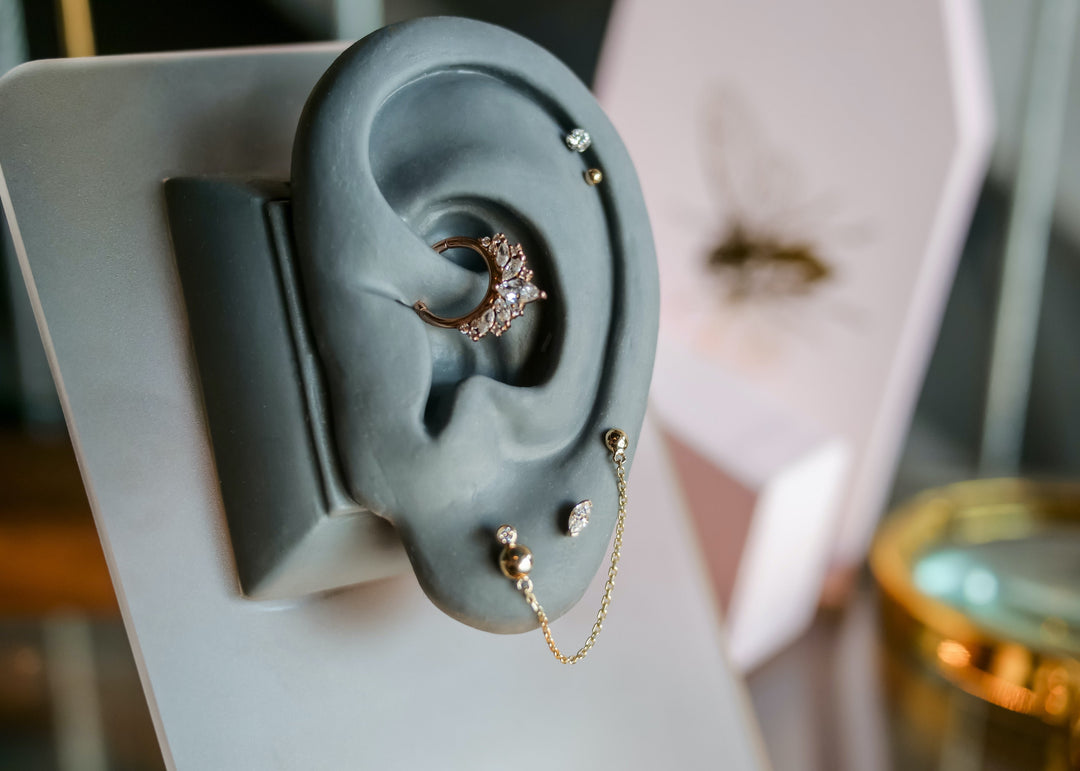
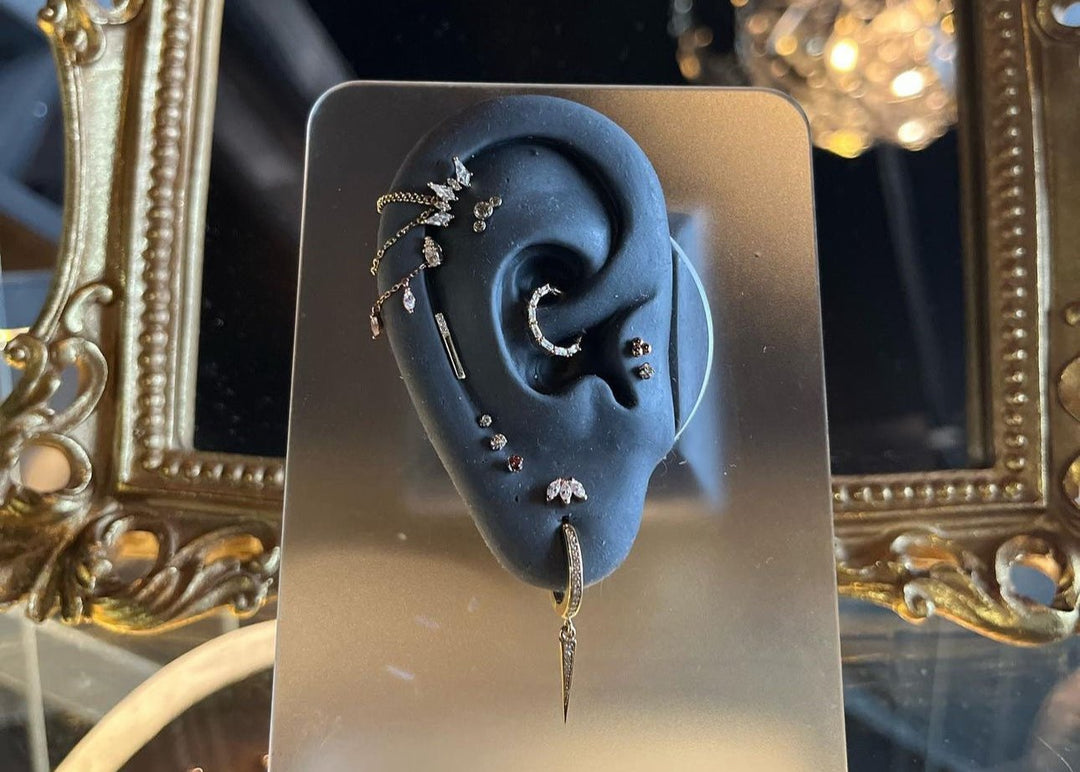
For cartilage, the anatomy varies less by body fat distribution and more by individual cartilage structure, but the consultation should still be looking at how the ear actually sits on the specific head, where the ridges are, how the helix curves. These things vary between people regardless of size and they should always be assessed individually.
What we believe and what we practice: your body is pierceable. Our job is to figure out how to do it correctly for the anatomy you actually have. That means a consultation that's actually looking at your body — not comparing it to a standard and finding it lacking, but mapping the specific landscape we're working with. Sometimes the right answer is an adjusted placement. Sometimes it's a different jewelry style than you initially wanted. Sometimes it's a different piercing altogether for a specific site that won't cooperate with the plan. That's not rejection. That's doing the job properly for the body that's actually in front of us.