Fast fashion taught us to treat jewelry as disposable.
Piercing culture is quietly rejecting that.
More people are choosing fewer piercings, higher-quality materials, and jewelry designed to last years, not seasons. Not because it’s trendy, but because it actually works better for the body.
This shift is turning piercing into something closer to slow fashion: intentional, durable, and anatomy-aware.
What fast fashion did to jewelry
Fast fashion jewelry is built around three assumptions:
-
You’ll only wear it for a short time
-
It doesn’t need to survive daily wear
-
It won’t live inside your body
Piercing jewelry breaks all three.
Plated metals, mystery alloys, and poorly finished pieces might look fine in a display case, but once they’re worn 24/7 inside living tissue, problems show up fast:
-
Chronic irritation
-
Prolonged swelling
-
Discoloration and flaking
-
Jewelry that needs replacing long before healing is complete
Cheap jewelry doesn’t just wear out. It interferes with healing.
Why piercing demands slow fashion thinking
A piercing isn’t an outfit.
It’s a wound that heals around an object.
That’s why materials, finish, and design matter more here than almost anywhere else in fashion.
High-quality piercing jewelry is designed to:
-
Resist corrosion from sweat and body chemistry
-
Stay smooth under magnification
-
Hold its shape for years without degrading
-
Be resized or restyled without replacing the entire piece
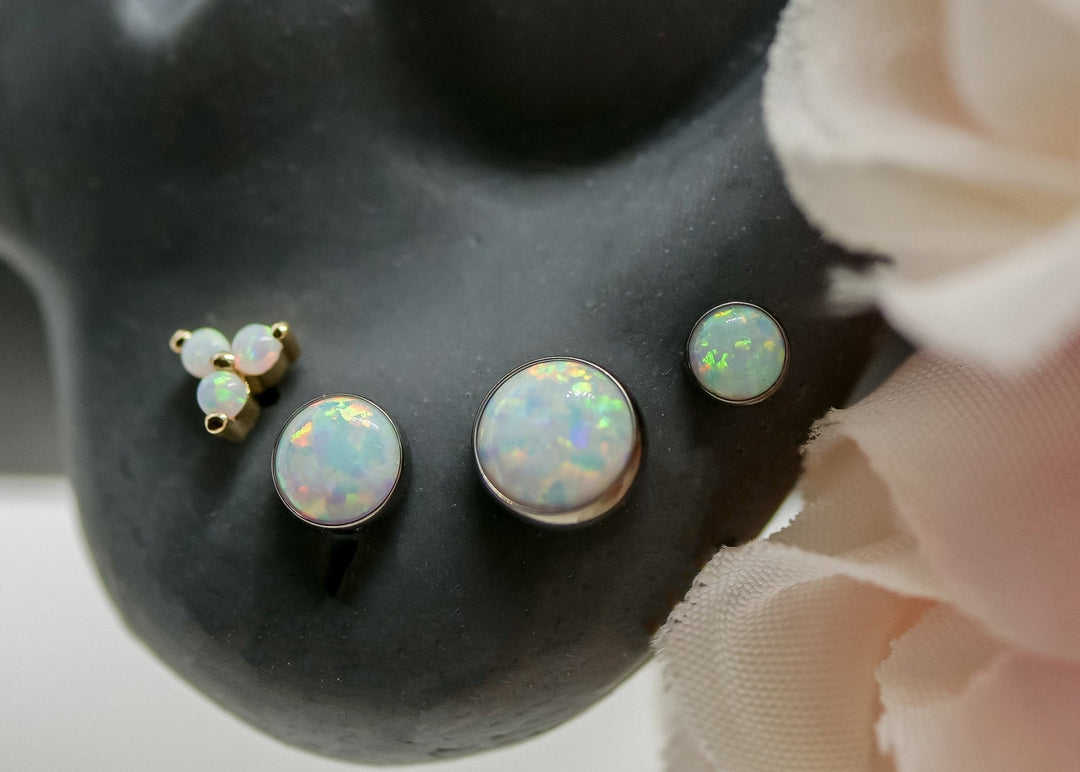
This is why implant-grade titanium and solid gold dominate professional piercing studios. Not because they’re trendy, but because they behave predictably inside the body.
Fewer piercings are becoming the luxury choice
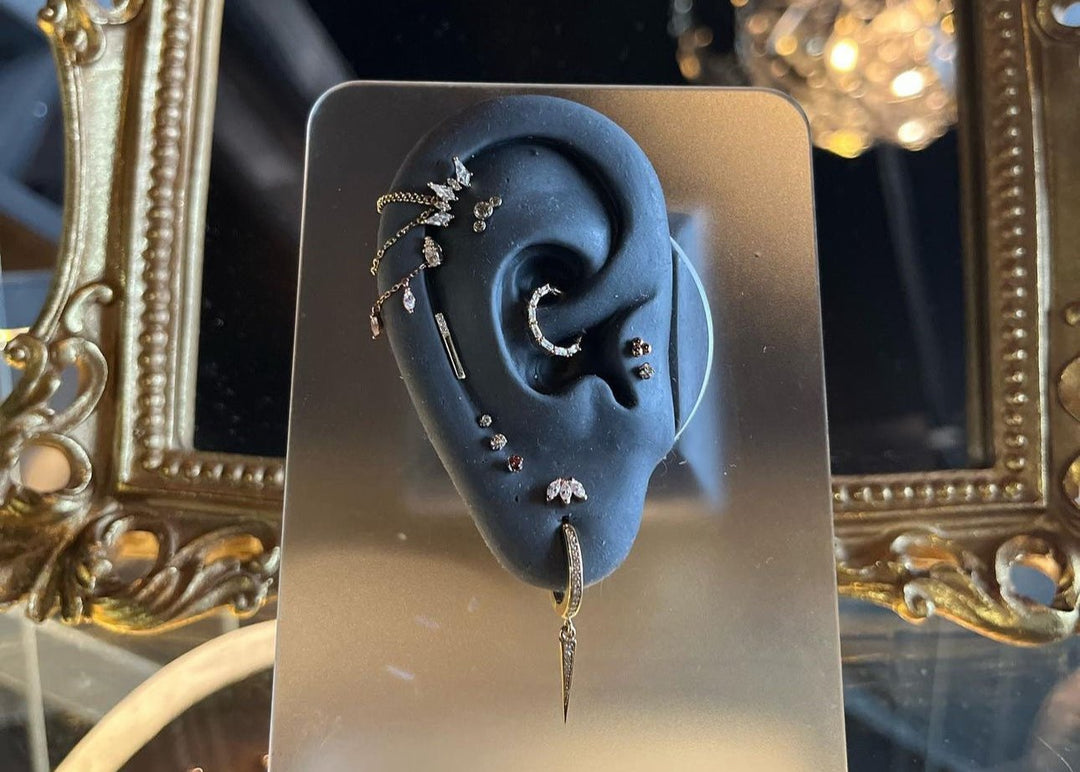
For a long time, “more” was the aesthetic: stacked ears, crowded cartilage, heavy statement pieces everywhere.
What we’re seeing now is the opposite.
Luxury piercing is moving toward:
-
Negative space
-
Intentional placement
-
Jewelry that looks good from every angle
-
Pieces that still feel right years later
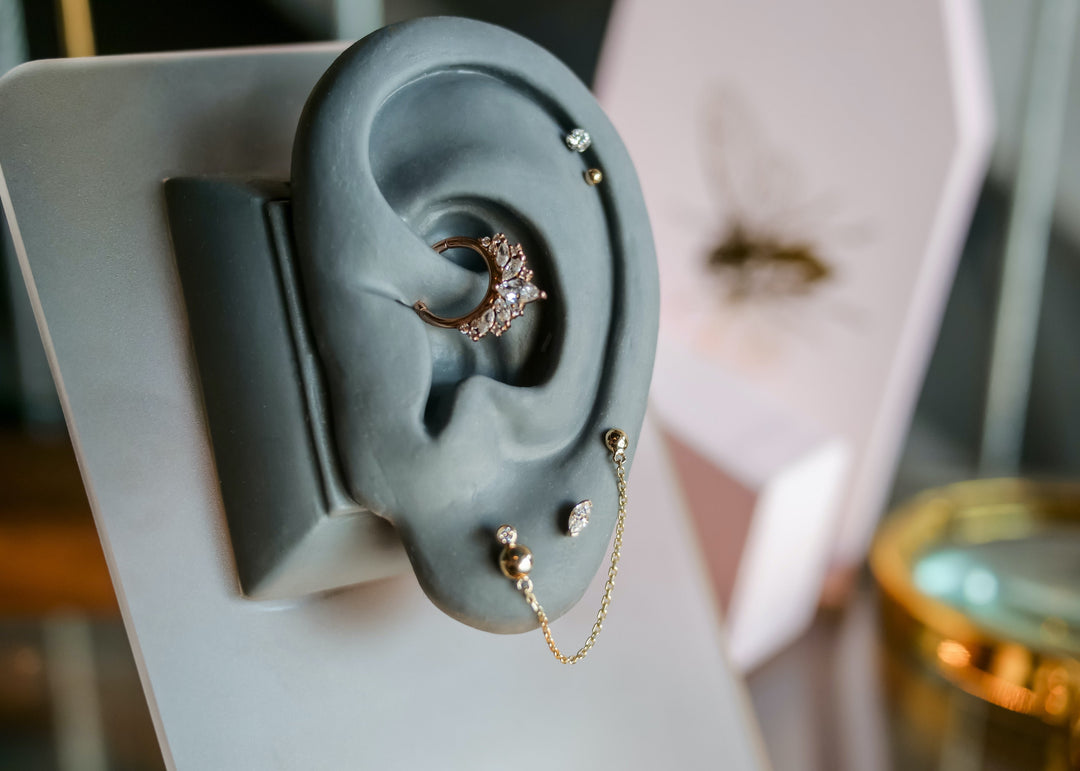
A single, well-placed piercing with quality jewelry often reads more elevated than five rushed ones with disposable pieces.
It’s not minimalism for the sake of aesthetics. It’s respect for anatomy and longevity.
Buy once, wear forever: how slow adornment actually works
Anti–fast fashion piercing isn’t about owning less. It’s about owning better systems.
High-quality piercing jewelry is often modular:
-
One post
-
Multiple interchangeable tops
-
Different looks without removing the post
Instead of buying new jewelry every time your style shifts, you restyle what you already own.
This reduces:
-
Waste
-
Cost over time
-
Healing disruptions from frequent swaps
It also makes your collection feel more like fine jewelry and less like trend inventory.
What to look for if you want anti–fast fashion piercing jewelry
If you want your piercings to age well, look for:
-
Verified materials (implant-grade titanium or solid gold)
-
Threadless or internally threaded designs (no exposed threading)
-
High polish finishes (mirror-smooth under magnification)
-
Jewelry designed for downsizing as swelling reduces
Avoid vague labels like “hypoallergenic” without material standards. That language isn’t regulated and doesn’t guarantee safety.
Piercing as a long-term relationship with your body
Fast fashion treats the body as a hanger.
Piercing treats the body as a collaborator.
When you choose quality jewelry and intentional placement, you’re not just following a trend. You’re making a decision that respects healing, comfort, and future you.
That’s why piercing is becoming anti–fast fashion by default.
Not louder.
Not trendier.
Just better.